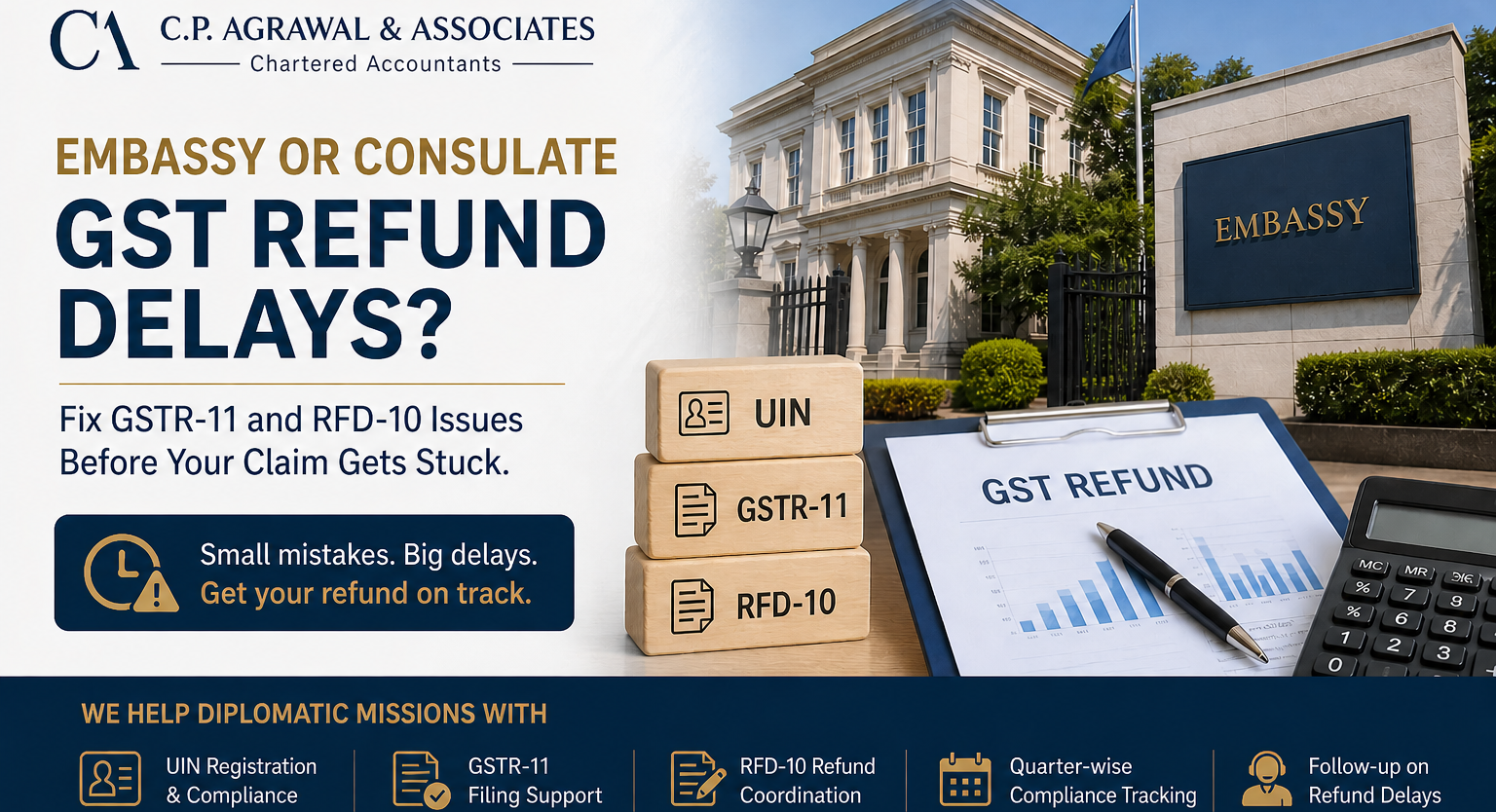
For embassies, consulates, and notified international organisations, GST compliance in India is not about routine tax filing. It is about making sure the refund is not delayed, the UIN is correctly used, and the quarterly claim is filed without errors. Under the GST system, embassies and consulates can apply for a UIN, and the refund of eligible inward supplies is processed through the linked GSTR-11 and RFD-10 mechanism. The GST portal specifically states that RFD-10 is generated after filing GSTR-11 for the same quarter. That is where many claims get stuck.
The most common problems embassies and consulates face ⚠️
1) The UIN is not set up or used correctly
Embassies, consulates, and other notified persons can apply for UIN directly on the GST portal. The official guidance says embassies and UN bodies can use a single registration for India, and the GST FAQ also states that embassies and UN bodies are required to take a Unique Identity Number.
2) Supplier invoices do not properly reflect the UIN
If the UIN is not correctly mentioned on inward supply invoices, the refund trail becomes harder to reconcile. The refund system depends on inward supply details being correctly captured against the UIN.
3) GSTR-11 is filed, but RFD-10 is missed or delayed
This is one of the biggest operational issues. The GST portal says that after filing GSTR-11, the applicant must generate the RFD-10 application form for the same quarter.
4) The quarter or filing window is not tracked properly
The refund process is quarterly, and the portal requires the applicant to choose the relevant financial year and quarter while filing. The portal also states that the refund application must be filed before the expiry of eighteen months from the last day of the quarter in which the supply was received.
5) The claim is delayed because records are incomplete
The GST portal notes that saved RFD-10 applications are available only for a limited period before being deleted automatically, so incomplete coordination can directly affect the timeline.
What embassies and consulates should do before filing GSTR-11 ✔️
Before filing, the inward supply data should be checked invoice by invoice. The UIN should be correctly reflected, the quarter should be matched correctly, and the refund claim should be planned so that RFD-10 is generated immediately after GSTR-11. A well-prepared filing should also ensure that the correct entity type is used during registration.
The GST framework also recognises that refund eligibility for certain diplomatic and notified entities follows specific conditions, including reciprocity in some cases. That makes careful review before filing especially important.
How C.P. Agrawal & Associates can help 🤝
At C.P. Agrawal & Associates, we can support embassies, consulates, and international organisations with:
- UIN registration and compliance support
- review of inward supply invoices and records
- preparation and filing support for GSTR-11
- RFD-10 refund coordination
- quarter-wise compliance tracking
- follow-up on refund delays and documentation gaps
For organisations dealing with repeated mismatches or delayed claims, this kind of support can reduce filing errors and make the refund process smoother. That fits directly with the official filing workflow on the GST portal.
Need help with embassy or consulate GST refund filing?
C.P. Agrawal & Associates can assist with UIN, GSTR-11, RFD-10, and refund follow-up so your claim does not get stuck.
No, GSTR-11 is followed by RFD-10 for the same quarter.
Yes. The GST portal allows embassies, consulates, and other notified persons to apply for UIN.
Usually invoice mismatch, missing UIN details, or delayed filing of the refund application after GSTR-11. That follows from the portal’s linked filing process.
Yes, CBIC has clarified that eligible diplomatic missions and specified organisations can claim refund of Compensation Cess subject to the prescribed conditions.
By Komal Agrawal, Co-Founder, C.P. Agrawal & Associates